



IT due diligence is critical for all mergers and acquisitions (M&A), even if the target is a non-software organization. Numerous companies depend on IT resources for daily activities. Without examining every component, an acquirer might inherit legacy platforms, non-compliant apps, or buggy products.
Our article includes an IT due diligence checklist to help you evaluate all aspects of the technical infrastructure, managed services providers and vendors, and human resources. We also explain why you should never neglect a proper audit before an M&A.
What Is Technology Due Diligence in M&A?
Technology due diligence in mergers and acquisitions is the structured evaluation of a target company’s IT infrastructure, applications, code quality, cybersecurity posture, and technical talent before a deal is signed. Rather than taking a seller’s word for how systems perform, a technology due diligence engagement ran before an M&A verifies architecture diagrams, license records, and security certifications match what’s actually running in production.
The process sits alongside financial and legal due diligence, but it answers a different question: can the technology support the combined business after close, and what will it cost to get it there? Buyers use the findings to adjust valuation or deal structure, while sellers use an early self-assessment to fix obvious gaps before they ever reach a data room.
IT Due Diligence vs. Technical Due Diligence
The terms are often used interchangeably, but they describe slightly different scopes. IT due diligence tends to focus on the operational side of technology — hardware, networks, vendor contracts, IT budgets, and support processes. Technical due diligence (sometimes called code or product due diligence) drills deeper into engineering specifics: source code quality, architecture decisions, test coverage, and development practices.
In practice, most acquirers combine both into a single technical due diligence checklist so infrastructure and codebase risks are assessed together rather than in separate silos. When people refer to M&A technical due diligence, they usually mean this combined review of both the operational IT estate and the underlying software itself.
Buy-Side vs. Sell-Side Technology Due Diligence
Technology due diligence looks different depending on which side of the table you’re sitting on. On the buy side, the acquiring company’s technical team (or an outsourced partner) audits the target’s systems, code, and vendor relationships to uncover risks before the deal closes.
On the sell side, the target company runs its own internal review — often called vendor due diligence — to identify and remediate weaknesses in advance, which can prevent last-minute price renegotiations. Regardless of which side initiates it, M&A IT due diligence works best when both parties treat it as a collaborative exercise rather than an adversarial audit because the goal is a technology foundation that actually supports the newly combined organization.
M&A IT Due Diligence Process: 8 Key Steps
A well-run IT due diligence process generally follows a predictable sequence, even though the depth of each step varies by deal size and industry:
- Define scope and objectives — Agree on which systems, products, and time periods the review will cover.
- Assemble the due diligence team — Bring in internal engineers, security specialists, and outside consultants as needed.
- Request documentation — Use a virtual data room to collect architecture diagrams, contracts, licenses, and audit reports.
- Review infrastructure and applications — Walk through the checklist below, category by category, from hardware to software assets.
- Assess cybersecurity and compliance — Test controls, review incident history, and confirm regulatory alignment.
- Interview key technical staff — Validate what the documentation says against what the team actually does day to day.
- Compile findings into a report — Translate technical risk into business language deal-makers can act on.
- Support negotiation and integration planning — Feed findings into pricing discussions and a post-merger technology roadmap.
Why is IT Due Diligence Critical for M&A?
Information technology (IT) due diligence reveals the company’s technical readiness for mergers and acquisitions. The IT infrastructure is reviewed for compatibility, scalability, security, performance, and other technical factors.
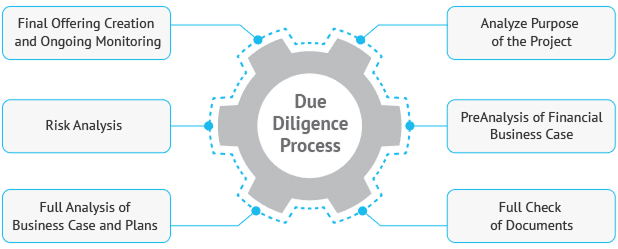
The technology due diligence allows both sides of the M&A to:
- Determine strengths, preserve competent human resources, and keep essential expertise on board.
- Ensure alignment of the IT architectures with business process development practices (of both companies).
- Verify security protocols, encryption standards, and regulatory compliance (with GDPR, HIPAA, CCPA, PCI-DSS, etc.).
- Pinpoint technical weaknesses, poor code quality, and legacy software that could inflate costs.
- Discover unlicensed software applications, missing patent applications, or intellectual property infringements.
- Anticipate necessary upgrades and the required optimization budget after the M&A.
No M&A should be finalized before a tech due diligence. So, let’s get straight to the point and explain what to check for.
M&A Technology Due Diligence Checklist
Prepare to assess every aspect of the company’s technology. For guidance, we’ve combined the factors that require checking during an IT due diligence, divided them into aspects, and presented it all as a checklist.
1. IT infrastructure and hardware
The audit should help determine the need for software migrations and hardware upgrades or replacements.
- Catalog hardware assets (servers, workstations, IoT devices, networks, etc.) based on usage levels, age, and maintenance requirements.
- Assess the deployment methods (cloud-based, on-premises, hybrid setups).
- Analyze backup strategies, failover designs, and historical downtime statistics.
2. System architecture
During due diligence in IT, companies should ensure that the architectural patterns can handle the combined demands of both companies.
- Evaluate architecture types (monolithic system, modular, microservices, or serverless).
- Check how business-critical applications handle high load volumes and stress tests.
- Assess the long-term maintainability of the current architectures and potential modularization (from monolithic to loosely coupled).
3. Applications and software assets
An application portfolio review highlights compatibility gaps and unnecessary tools that can be retired or replaced after mergers.
- Assess the company’s application portfolio for duplicate applications, end-of-life software, and unnecessary features.
- Evaluate the technical feasibility of existing applications and tools (storage, bandwidth, maintenance needs, and degree of dependence on other apps).
- Confirm that all open-source components comply with proper licensing and agreements.
4. Products and services
Technical due diligence should clarify the viability of investments in current products or specific features.
- Assess the performance and revenue metrics to gauge market competitiveness for each product and service.
- Examine product designs and feature roadmaps for the existing products.
- Identify production, licensing, and support costs tied to each product or service.
5. Budget
Reviewing IT can reveal cost overlaps and optimization opportunities.
- Analyze annual IT budgets, CapEx vs. OpEx distribution, and projected growth or cuts.
- Examine IT spending, highlighting the costs of upgrades, software licensing, and third-party tools not included in basic financials.
- Plan for integration expenses, new tools, and platform migrations after the IT due diligence process.
- Investigate recurring issues that could signal product flaws or future liabilities.
6. Vendor and MSP contracts
The IT due diligence checklist includes an evaluation of managed service providers (MSPs) and other third-party vendors.
- Examine hosting providers and telecom contracts for termination clauses or lock-ins.
- Identify technical certifications, points of contact, and contract terms with the MSPs.
- Determine if all vendor relationships work in the new company’s IT ecosystem.
- Assess opportunities to consolidate services, reduce costs, or align vendor terms.
- Review outsourcing or joint development contracts for shared projects.
7. Software licenses
Confirming license ownership and transfer terms reduces legal risks and ensures compliance.
- List all proprietary and open-source software licenses, identifying unauthorized usage or expired licenses.
- Check if licenses are transferable to a new parent entity or if additional fees apply.
8. Intellectual property
Patents, trademarks, and proprietary code are essential parts of the technical due diligence for M&A.
- Confirm that software, patents, trademarks, and data rights belong to the company.
- Verify source code access by checking if each IP is protected or duplicated without authorization.
- Look for any threatened or ongoing IP disputes that could impact valuation.
- Determine how actively the target enforces patents, trademarks, and copyrights.
9. Human resources
The audit should identify critical talent and key roles that keep the IT systems running. It’s also necessary to engage with subject matter experts who can assist in the technical due diligence process and respond to data requests swiftly.
- Identify core IT team members, their expertise areas, and talent gaps.
- Evaluate the retention risks and turnover triggers (like uncompetitive salaries or a poor working culture).
- Assess the documented internal policies (for in-house employees and outsourced teams).
- Analyze reporting lines, departmental overlaps, and cross-functional collaboration.
10. IT maintenance procedures
Examine the frequency and quality of system updates and maintenance to keep systems running smoothly after the acquisition.
- Review logs of previous outages or slowdowns, investigating their root causes.
- Assess if external vendors handle critical maintenance at sufficient levels.
- Review the backup frequencies, critical data storage locations, and recovery (system restoration) protocols.
11. Technical debt
A thorough due diligence of IT systems should pinpoint inefficiencies or unresolved issues that accumulate over time.
- Document known issues, legacy systems, code refactors, and architectural flaws.
- Analyze the risk impact of technical debt on reliability, compliance, and performance.
12. Code and development quality
Assessing coding standards and testing approaches can reveal the team’s efficiency and the product’s resilience.
- Evaluate consistency in coding standards, documentation, and version control.
- Check for well-defined data cleaning, backup, and disaster recovery measures.
- Verify whether the software development methodologies align with those of the new organization.
- Look for possible overlaps in the tech stack and CI/CD tools.
13. Integration and scalability
This stage of tech due diligence helps uncover the degrees of dependence between the company’s systems and the difficulty of scaling resources for specific apps.
- Check whether the tech stack, frameworks, and data follow uniform standards.
- Verify if the apps are modifiable via APIs or services without a major rework.
- Identify whether the target’s architecture can handle increased workloads post-acquisition.
- Outline a timeline for merging systems, migrating data, and team training.
14. Customer care and support
The IT due diligence should evaluate the support channels to make sure they retain customer loyalty during the organization’s transition.
- Analyze average response times, escalation protocols, and resolution rates.
- Check if the chatbots, AI-driven support agents, and self-service portals meet the required business standards.
- Verify that the support commitments uphold the service level agreements (SLAs).
15. Cybersecurity and compliance
Confirming incident response readiness and compliance is critical in IT due diligence, especially for mergers and acquisitions with companies across regions.
- Scrutinize firewalls, intrusion detection systems, authentication protocols, and encryption mechanisms.
- Assess regulatory compliance with key data security and privacy protection laws.
- Investigate any attack history or data breaches, the time it took to detect these, and the ways they were resolved.
- Determine if the target has a documented framework (like ISO/IEC 27001) for risk management.
You should approach this checklist as an IT due diligence guide rather than an exhaustive list, but these fundamentals can help you avoid the most problems. Speaking of which…
IT Due Diligence Documents and Evidence to Request
A large part of any technology review for M&A comes down to paperwork. You can’t assess what you can’t see. Before the review starts, ask the target for a documentation package that typically includes:
- Network and system architecture diagrams
- Hardware and software asset inventories
- Source code repository access (or a code audit report)
- Software license agreements and proof of entitlement
- Vendor and MSP contracts, including SLAs and termination clauses
- Cybersecurity policies, penetration test results, and breach history
- IT budgets, spending records, and capital expenditure plans
- Org charts and job descriptions for the IT and engineering teams
- Incident and outage logs, along with root-cause reports
- Any prior technology assessment or audit the target has already been completed internally
Common M&A Technology Due Diligence Red Flags
Rushing into an M&A without conducting technology due diligence or neglecting regular IT assessments can expose companies to expensive mistakes.
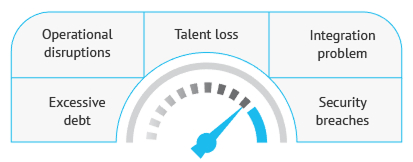
- Excessive debt: Overlooking infrastructure and applications may leave you with old hardware, outdated code, or redundant (overlapping) software and tools.
- Integration problems: By failing to verify compatibility, data formats, and standards, you can end up spending extra resources to modernize applications.
- Talent loss: You need to run proper technical due diligence to identify and retain high-value employees (like senior devs, systems architects, and security experts).
- Operational disruptions: Performance issues and downtime are the results of poor load testing, insufficient maintenance policies, and inadequate disaster recovery planning.
- Security breaches: Unpatched systems, skimpy security mechanisms, or non-compliant data policies can lead to security breaches and regulatory fines.
A thorough IT audit can maximize the value of mergers and acquisitions, especially when conducted with the right tools.
What Should an IT Due Diligence Report Include?
The output of any M&A tech review is only as useful as the report that summarizes it. A strong IT due diligence assessment usually includes:
- Executive summary — A plain-language overview of overall technology health and deal-relevant risks, written for non-technical stakeholders.
- Findings by category — Detailed observations organized to mirror the checklist (infrastructure, applications, security, IP, talent, and so on).
- Risk ratings — A scored or color-coded view of which issues are critical, moderate, or low priority.
- Cost estimates — Projected spend to remediate gaps, retire legacy systems, or complete integration work.
- Recommendations — Concrete next steps, whether that’s renegotiating price, requesting indemnities, or building a post-close remediation plan.
- Appendices — Supporting evidence such as scan results, interview notes, and copies of key contracts.
How to Prepare for Technology Due Diligence in Software M&A
Knowing how to prepare for technology due diligence in software M&A can shorten the process significantly and reduce the risk of surprises on either side. Sellers should start by running their own internal review against a software due diligence checklist well before a buyer is engaged — cleaning up license records, documenting architecture decisions, and resolving known security gaps in advance.
Buyers, meanwhile, should define their scope early, line up technical reviewers with relevant domain experience, and build a clear IT due diligence strategy that ties directly to deal timelines. Anyone approaching due diligence when buying a software company should also budget extra time for source code review and license verification, since these areas most often surface late-stage issues that delay or reprice a transaction.
Technology due diligence in mergers and acquisitions moves fastest when both sides treat documentation requests as routine rather than adversarial, so building that cooperative tone early pays off later in the process.
Tools and Resources for IT Due Diligence
It’s easier to follow the technology due diligence checklist if your team is equipped with supplementary tools. The following solutions are the most useful:
- Project management tools like Jira and Trello help assign tasks to the due diligence teams and track progress.
- Code quality review software like SonarQube and Coverity helps detect bugs, code smells, performance issues, and other errors.
- Security scanning tools like Qualys and Nessus check for misconfiguration, network vulnerabilities, unsecured endpoints, and other issues.
- Regulatory compliance platforms, such as OneTrust and Netwrix Auditor, help verify the handling of personally identifiable information and prepare for audits.
- Virtual Data Rooms (VDRs) like DealRoom provide secure spaces to manage technical documents and collaborate with stakeholders and vendors during IT due diligence.
- AI-based tools like Kira and Microsoft Security Copilot help interpret massive amounts of threat data, summarize documentation, and enhance other parts of the audit.
Read more: Best Code Review Tools For Developers [2025]
How DevCom Can Help with IT Due Diligence
Before an M&A, every IT element, including servers, code repositories, staff, and MSP agreements, must be examined. Evaluating every aspect is demanding, especially under tight timeframes and with limited knowledge. Yet overlooking minor risks or licensing clauses can result in unpleasant surprises after the merger.
DevCom can help you plan, execute, and finalize a technical due diligence report. We provide high-level counsel, conduct source code audits, and handle IT modernization initiatives.
We combine 25+ years of technology consulting with in-depth knowledge of enterprise software development and cloud computing. Feel free to contact us if you want to learn more.
FAQs
Working through this checklist typically uncovers outdated systems, unlicensed software, security gaps, IP risks, and hidden technical debt, but it also confirms what’s working well, giving buyers an accurate picture of what they’re acquiring.
The terms are largely interchangeable, and most practitioners treat any IT due diligence guide as covering both. Where a distinction is drawn, “IT” leans toward infrastructure and vendor management, while “technology” (or information technology due diligence) also covers product strategy and engineering practices.
The duration of IT due diligence in mergers and acquisitions depends on the assessment scope, the target company’s size, IT infrastructure complexity, and stakeholders’ involvement. It can span from a few weeks to several months. Companies often partner with experts or outsource firms to expedite the process.
Usually the acquirer’s internal IT and engineering leadership, often supplemented by outside consultants who specialize in this kind of technical review for M&A, plus legal and security specialists as needed, all following a documented IT due diligence strategy for consistency.
At minimum: architecture diagrams, hardware/software inventories, license agreements, vendor contracts, security audit results, IT budgets, and HR documentation. Many advisors provide a standing due diligence checklist for a technology company, so working down that list is easier.
Run an internal review against an M&A software due diligence checklist before buyer outreach — resolving license gaps and security issues early. That way, when formal M&A technical due diligence begins, the company can respond quickly, keeping the overall M&A technology review on schedule.





























.svg)