


Scanners tell you whether code is written safely. A security code audit tells you whether it behaves the way your business intends, for example, whether someone can reset another user’s password by swapping the email address in a request.
Requests like that pass every automated check, since the code itself is valid and only your product rules say otherwise. This guide covers what auditors check, how a code security audit runs, what to prepare, and what it costs.
Why Is a Security Code Audit Important?
AI-generated code is the newest reason to audit. McKinsey’s Technology Trends Outlook 2026 says AI writes code faster than teams can review it, and Verizon’s 2026 Data Breach Investigations Report found 31% of breaches started with an exploited software vulnerability, outstripping those using stolen passwords.
That leaves a growing pile of code that only machines have read. Pipeline checks on each pull request catch the known patterns in it, like SQL injection. Broken auth checks and business logic errors look like valid code to those checks. A security code audit adds manual code reviews by an engineer who knows your product rules and reads the code against them.
The older reasons still apply, and they often come from outside the security team:
 Compliance. SOC 2, ISO 27001, HIPAA, and PCI DSS security audits ask for proof that someone checked the code against security standards.
- Due diligence. Investors and acquirers look at code quality and security risks before a deal.
- Fix costs. A flaw costs a code change before release and an incident response after a breach.
- Old dependencies. Third-party libraries your team stopped updating collect new CVEs every year, and a code security audit shows which ones an attacker can reach from your attack surface.
How much of this you get depends on what the auditors look at.
What Does a Security Code Audit Check?
A source code security audit covers every place where a request from outside can reach your data or run code. Auditors map these areas to the OWASP Top 10 and CWE lists and adapt them to your stack:

Access control
Can user A open user B’s invoice by changing an ID, or call an admin endpoint? OWASP found some form of broken access control in 100% of the applications tested for its 2025 Top 10.

Input handling
The auditor traces user input to every query, shell command, HTML template, and deserializer it reaches, looking for SQL injection and code injection.

Business logic
A subscription-tier bypass or a race condition where two parallel requests spend the same balance twice.

Secrets and
cryptography
Hardcoded credentials, exposed secrets in git history, and cryptographic errors like passwords hashed with MD5 or tokens signed with a weak key.

Third-party code
Outdated libraries with known CVEs and packages with malicious code inside. The auditor checks whether your code calls the vulnerable function, which clears false positives out of the software composition analysis output.
The depth for each area depends on the scope you agree on. A narrow audit covers login and payments line by line, while a full one goes through the entire source code.
How Does a Security Code Audit Work?
A source code security audit usually goes through five stages:
1. Scoping and threat modeling.
The auditors get read access to the repository and ask your team how the product works: user roles, payment flows, external integrations, and where sensitive data is stored. They build a threat model from these answers and agree with you on which parts get a line-by-line review.
2. Automated scanning.
Static code analysis, software composition analysis, secrets scanning, and IaC (Infrastructure as Code) scanning run across the whole codebase. An engineer then goes through the output and filters out false positives.
3. Manual code reviews.
This stage takes the longest. Engineers read the high-risk code from the threat model, such as authentication and payment logic, and test each assumption the code makes about who is calling it.
4. Dynamic analysis.
Some flaws appear only at runtime: a misconfigured service, a verbose error message, a session that stays valid after logout, or a CORS rule that accepts any origin. Auditors run the application in a staging environment to confirm these and to check which static findings an attacker can exploit.
5. Report and retest.
You get a report with every finding ranked by severity, plus the affected code and a fix for each. After the fixes go live, the auditors check them again and update the report, which you can hand to a SOC 2 auditor or a client’s security team.
Your team can shorten each stage by preparing a few things in advance. The checklist below covers these.
Security Code Audit Checklist
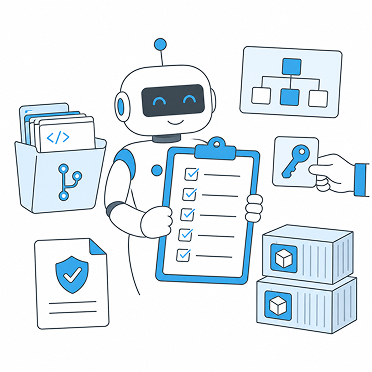
Use this list twice: once before the audit starts and once after the findings are fixed. The first part cuts the hours auditors spend waiting for access, and the second covers the months between code audits, when your developers or an ongoing reviewer keep watch.
Before the security code audit
- Read access to the repository, CI logs, and IaC files, plus network access to a staging environment with a test account for each user role.
- An architecture diagram and a short note on who can access what. Threat modeling goes much faster with both on the table.
- A list of modules written with AI tools or inherited from a contractor, and any areas of known technical debt.
- Exact dependency versions (an SBOM works best) and the container images you deploy.
- Your latest vulnerability scanning results from the CI/CD pipelines. Auditors skip the security vulnerabilities you already know about and spend the time on new ones.
- The compliance mandates you answer to, like SOC 2 or HIPAA.
- One engineer on your side who can answer questions within a day.
Between audits
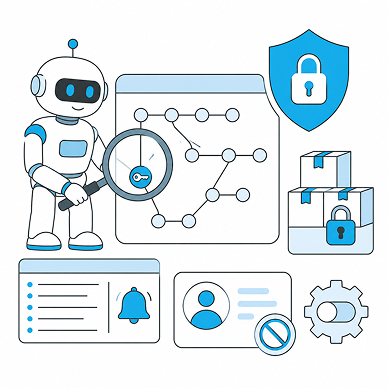
- Secrets. Scan the whole git history, including old branches. Every key you find gets rotated, even if it looks dead.
- Dependencies. Pin versions in a lockfile with hashes and make the build fail on new critical CVEs. Check who maintains a new library and when it was last updated before you merge it.
- Access. Log in as a user from another tenant and try to open your records. Then try the same with a lower role.
- Configuration. Debug mode off in production, generic error messages, CORS limited to your own domains, admin panels behind a VPN.
- Logging. Failed logins and access-control denials should end up in the logs, with an alert when they spike.
- Coding standards. A one-page document on input validation and secret handling is enough. Reviewers check it in code reviews for every pull request.
AI-generated code also deserves closer attention during a security audit. The next section covers common vulnerabilities and how auditors check for them.
AI Code Security Audit: Reviewing AI-Generated Code
Code from an AI assistant compiles and looks tidy, so reviewers often approve it faster than code from a junior developer. Veracode’s 2026 GenAI Code Security Report shows the gap behind that look: across more than 100 models, generated code compiled almost every time, yet the average security pass rate stayed at 56%.
The flaws in AI-generated code follow a few recognizable patterns. They look like this in a typical SaaS codebase:
 A secret in the browser bundle. The assistant puts an API key behind a NEXT_PUBLIC_ variable so the example runs, and the key ends up in every visitor’s browser.
- Row-level security that exists on paper. A Supabase table has RLS switched on with a USING (true) policy, so any signed-in user reads every row.
- Roles the user can edit. An admin check reads a field from user metadata, which the user can change through the auth API.
- Invented packages. A model suggests a package name that sounds right and exists only because an attacker registered it with malicious code inside.
- User input inside the prompt. In products with LLM features, generated code may paste the user’s message straight into the system prompt of an agent that can call tools, which opens the way for prompt injection.
DORA’s 2025 State of AI-assisted Software Development report describes AI as an amplifier that magnifies the existing strengths and weaknesses of a software engineering team. An AI code security audit adjusts to that: auditors ask your team which modules came from AI tools and give those files a closer manual read, the same way they’d read a pull request from a new hire.
Dependency scanning covers every package the assistant added, including a check that each one is the package your team meant to install. For every leaked key, the auditors recommend rotating it at the provider, since the old value keeps working after you delete it from the code.
Automated code review tools handle part of this work, and some of them run on AI themselves. The next section covers which ones auditors use and what each class of tool catches.
Security Code Audit Tools
Code audit tools cover different parts of code security analysis, so an audit runs several of them side by side:

Static application security testing (SAST)
Static code analysis reads the code without running it. It’s good at the obvious stuff, like a string glued into a SQL query or a C buffer that can cause a memory overflow. SonarQube and ReSharper add style violations and code maintainability warnings on top, useful for code quality and mostly noise for a security review.

Dynamic testing (DAST)
Tools like OWASP ZAP send crafted requests to a running app and find problems that appear only in a live environment, like missing security headers or weak TLS settings. Their vulnerability detection covers the inputs they know how to fuzz, so an injection through a JSON field name can slip past.

Software composition analysis
This matches your dependencies against CVE databases and lists library vulnerabilities. Expect false positives until someone checks whether your code calls the vulnerable function.

AI code analysis
Claude Code, OpenAI Codex, GitHub Copilot, Amazon Q, and similar developer tools read code in context and comment on logic, a weak area for pattern-based static analysis. Their risk is confidence: an AI reviewer can describe a vulnerability that exists only in its answer.

Secrets and IaC scanning
Secrets scanners search code and git history for keys and tokens, while IaC tools check Terraform files and container images for misconfigurations.
Bundle all of this into one application security platform, hook it up to your CI/CD tools, and one question is still outstanding. Can a support agent refund an order, or just look at it? Auditors draw up an endpoint-permission matrix for this: endpoints down the side, roles across the top, the expected answer in every cell. Then they call each endpoint as each role and compare the results.
DevCom’s toolset includes SonarQube, ReSharper, Claude Code, OpenAI Codex, and GitHub Copilot. Our AI code analysis runs as a multi-agent deep analysis: several scanners cross-check each other’s findings until they agree, and an engineer verifies every result before it goes into the report.
How Much Does a Security Code Audit Cost?
The price of a code security audit depends on the engineer hours it takes. Four things usually decide how many hours that is:
Size and age of the codebase
A SaaS app split into microservices costs less to audit than a monolith with years of patches and technical debt in it.
Scope
An automated scan of an MVP with human checks on priority findings is the cheapest option. A line-by-line read of a complex system is at the other end.
Format
A one-time audit gets a fixed quote after scoping, and ongoing reviews built into your SDLC are billed by engineer hours.
Stack
Legacy or rare frameworks slow down manual review, since auditors spend longer on code their tools barely support.
Here are DevCom’s approximate ranges for each scope:
| Scope | What’s included | Best fit | Price range (USD) |
|---|---|---|---|
| Security Snapshot | Automated scanning with human validation of priority findings | Small apps, MVPs, internal tools | 5,000-8,000 |
| Critical-Path Review | Manual review of agreed high-risk workflows: authentication, APIs, payments | Production systems, core SaaS apps | 8, 000-13,000 |
| Comprehensive Security Review | Line-by-line manual review, threat modeling, and remediation guidance | Complex or high-impact systems, regulated industries such as healthcare | 13,000-20,000 |
The tier that fits depends on why you’re ordering the audit.
When Should You Perform a Security Code Audit?
The trigger for a security code audit often comes from outside the engineering team, through a sales deal or an investor’s checklist. The timing also tells you which scope to book.
 A major release is close. A critical-path review a few weeks before launch leaves time to fix what it finds without moving the date.
- A large enterprise client sends a security questionnaire. They want proof of a recent review, and a critical-path review of authentication and payments is often enough to answer it.
- SOC 2, ISO 27001, HIPAA, or PCI DSS is a few months away. Book the comprehensive review early, so your team has time to fix findings before the external auditor arrives.
- You’re raising money or selling the company. Investors and acquirers ask for a software code audit during technical due diligence, and a recent report with closed findings speeds up that part of the deal.
- You just inherited code. Start with a security snapshot after an acquisition or a contractor handover to see where the risky parts are and how much technical debt came with them, then go deeper where it’s needed.
- Your team merged a big batch of AI-generated code or added a major integration. Both widen the attack surface in places your existing tests have yet to cover.
- Something already went wrong. A full security analysis of the affected source code after an incident shows how the attacker got in and whether other entry points share the same flaw.
For products that release every week, one audit a year leaves long gaps between checks. Ongoing review inside your pull request flow catches security vulnerabilities as they appear, and a full audit once a year covers the parts that changed the most.
Improve Your Code Security with DevCom’s Expertise
Say your largest prospect sends over a security questionnaire, and one question asks for an independent code review from the last twelve months. Here’s how that security code audit goes with DevCom.
First comes a mutual NDA, signed before we touch your code, and then a call with your CTO to go through the questionnaire together. It’s mostly about authentication and payments, so a critical-path review is enough.
Our engineers start with the scanners and get back a long list, a good part of it noise. They clear the false positives before anyone on your side sees the results. The finding that counts comes from reading the payment code by hand: the webhook that confirms payments accepts unsigned requests, so anyone who knows its URL can mark an order as paid. Your team gets it with the exact line and a suggested fix.
Your developers are deep in a release, so our engineers write the fix and your team reviews the pull request. After a retest, we update the report, and your CEO receives a one-page red-amber-green summary to attach to the questionnaire.
That’s the kind of work we’ve done for healthcare platforms that store patient records and fintech products that move money. The review framework behind it comes from more than 50 long-term client projects, where we run it every quarter.
Tell us what your audit is for, and we’ll suggest a scope and send a fixed quote.
FAQ
Mainly to find the holes before an attacker does. A security code audit also leaves you with a written report, which is what SOC 2 auditors and investors ask for when they want proof you checked.
Here’s the usual order for a security code audit: a scoping call, a threat model, scanners over the whole codebase, and then engineers reading the risky parts by hand, like login and payments. The auditors retest once the findings are fixed, and the whole code security audit takes a few days to three weeks.
Usually a handful of code audit tools working together. Here’s a common set for a security code audit: SonarQube for static code analysis and OWASP ZAP for testing the running app. Dependency and secrets scanners go on top, plus AI code analysis in Claude Code, OpenAI Codex, or GitHub Copilot, and an engineer goes through everything they flag.
Here’s the quick version of “how do I prepare my code for a security audit?”: Give auditors access to the repo and a staging environment, plus an architecture diagram, your dependency list, and the latest scanner results. Flag the modules written by AI or inherited from a contractor, so the code security audit starts with the riskiest parts.
Here’s how to audit third-party code for security: run software composition analysis against known library vulnerabilities, then check whether your code calls the vulnerable functions. During a security code audit, auditors also verify who maintains each library and look for malicious code in packages and build scripts.